Bithell The Vampire Slayer
Mike Bithell founded Bithell Games in 2013, a few years after the breakout success of Thomas Was Alone, a game he lovingly/jokingly calls his “pretentious platformer.” Since then, the studio has created many more games, ranging from larger IP-based releases like last year’s Tron: Catalyst to unique spins on foundational gaming texts like The Solitaire Conspiracy to wholly original adventure games like Subsurface Circular. Amongst the many genres the studio has dabbled in, Bithell has intentionally avoided his favorite: the immersive sim.
“That’s a sacred genre to me,” Bithell says. “I’m not going to throw any shade in a public way, but there are games that have said they’re immersive-sims that were not – I don’t like that. So, for the longest time, I kind of held out on comfortably ever referring to this as an immersive sim.”
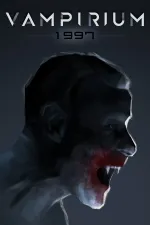
That “this” is Vampirium: 1997, an immersive sim, and it’s about a vampire who killed another vampire in a world where that’s outlawed and, stuck in prison on death row, is approached by the King of England – Dracula – to become his personal assassin.
“We hit a point where I just felt like, ‘No, we actually are giving the player the level of freedom I’d expect for an immersive sim.”
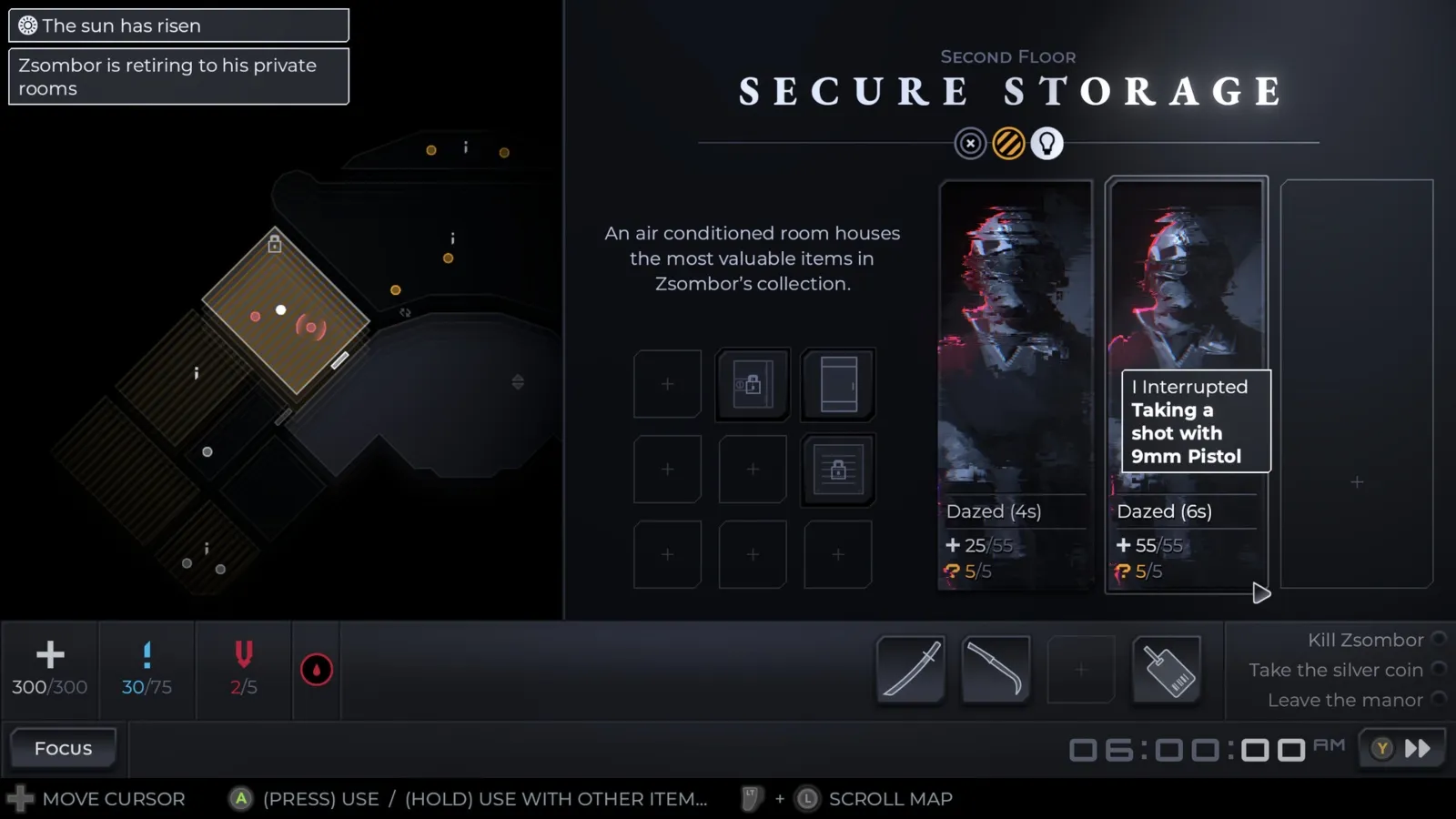
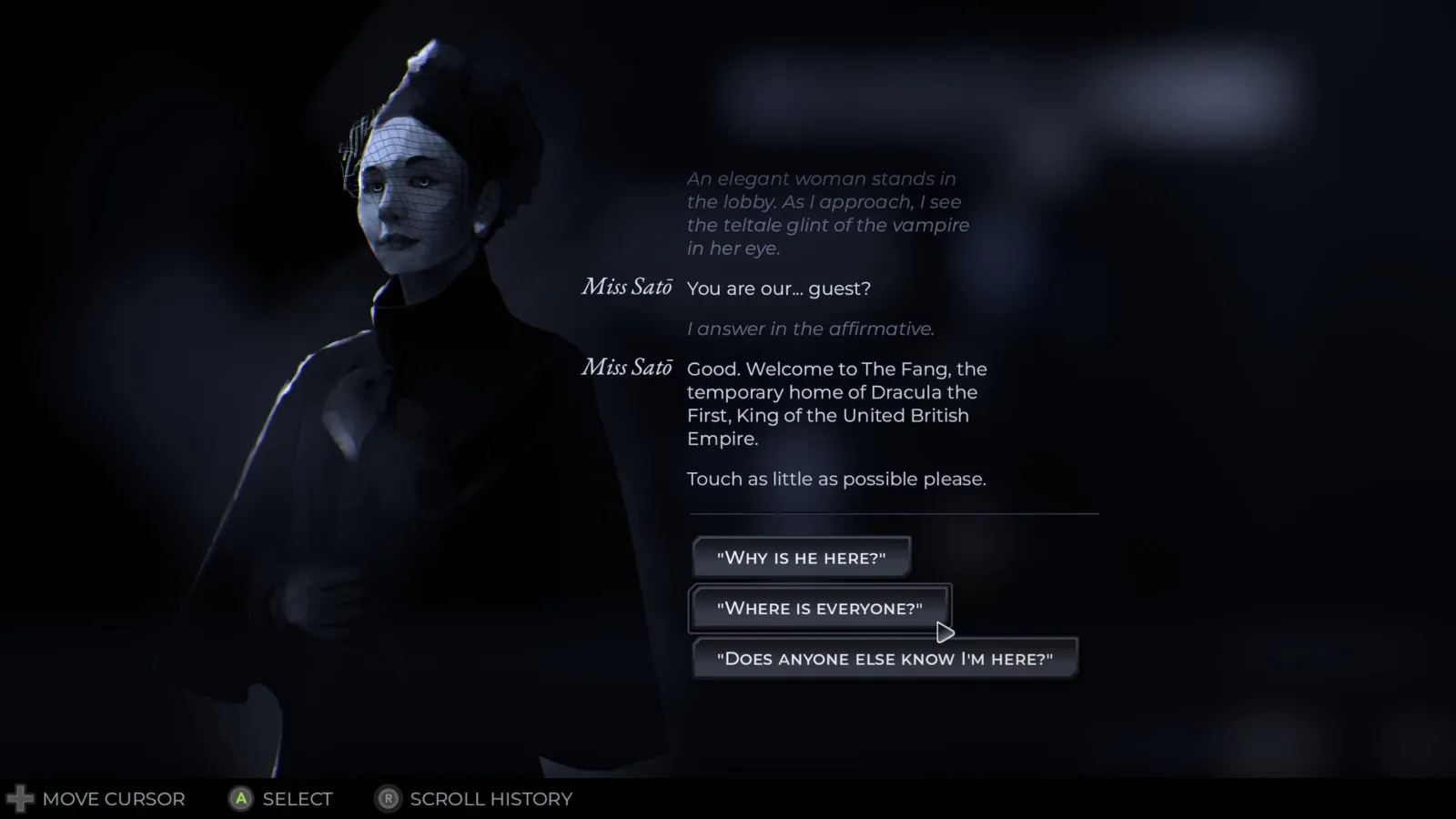
You say yes to Dracula in an effort to prevent losing your life, and so begins a playthrough of Bithell Games’ first-ever immersive sim. That said, Bithell has coined the term im-slim as something catchy for players to attach to Vampirium: 1997 and as a table-setter for expectations. Unlike Deus Ex or Dishonored or System Shock or the majority of other games in the genre, Vampirium: 1997 is not about exploring a 3D space and finding a unique path through it while utilizing the environment, game physics, and more to deal with obstructions or enemies in your way; It is instead almost entirely UI, distilling (or slimming down) the very essence of the genre to its core.
On the left of your screen is a map of hallways, lobbies, and more that make up Zsombor’s Manor, as seen in the gameplay walkthrough narrated by Bithell on the game’s Steam Page. On the right are your verbs, tastefully depicted using UI reminiscent of the 1990s visual design. You might also see a butler or guard character portrait with the need-to-know information, such as their health. With small snippets of text guiding you forward, the verbs you select, whether that’s opening a door or shoving the guard or picking up a katana, and your knowledge of the space before you, it’s up to you to determine how you progress forward and ultimately take out your Dracula-ordained target.
This slimmed-down approach to the im-sim is both a necessity for Bithell Games and what Bithell is most excited for players to experience. Roughly two months after the release of Tron: Catalyst in June of last year, Bithell Games let go of 11 employees, or in other words, the majority of the studio’s staff. “In terms of the game itself, it was me playing basically after we did layoffs,” he says. “I ended up doing stuff to distract myself and picked up Godot [a free open-source game creation engine gaining popularity as of late] and started making prototypes. Very quickly, this one started to congeal.” He said the game he was designing began to make sense in his head with the 1990s-inspired vampire story he’s wanted to build something with for years, and so Vampirium: 1997 was born. Bithell is, in effect, developing Vampirium: 1997 solo, though Bithell would never call it a solo dev-made game.
“I think to describe my process, it feels like I’m not alone,” Bithell, who is handling the game’s programming, art, writing, and music, says. “I’ve worked with lots of talented people and have lots of talented people who I can call up and ask for advice.” He says the lessons he’s learned from countless collaborators, friends, and colleagues in game development make up his experience and Vampirium: 1997 wouldn’t exist without that experience.
“If I go really hard on the ‘solo dev’ thing, then I’m erasing those people and their influence on me, and I would hope that everyone I’ve ever worked with, if they play this game, would see their influence on it,” he says, citing why a lean into solo dev would feel disingenuous to him.
As the sole person working directly on the game’s design and programming, and due to Bithell Games’ limited budget, Vampirium: 1997 had to be an im-slim, to borrow his terminology. But, as Bithell tells me, the more you take away, the more room there is for players to fill in the blanks with their imagination. He likens it to the sensation of reading a good book and knowing its world, its characters, its everything. Yes, of course the words help, but our brains fill in the blanks, and he hopes that, in between the on-screen verb selections and adventure-text moments, players will do the same in this 1997 take on vampires and the immersive sim.
“[It’s] amazing how quickly your brain makes this into a real place that you’re inside of,” Bithell says.
He’s especially excited about the game’s future Early Access launch, which is also the first time a Bithell Games creation has gone down the Early Access route. Bithell expects a lot of new verbs to be added to the game based on player feedback received during this period. “I definitely don’t want to go into Early Access until I think we’ve made something that’s worth paying for,” he says when I ask when the game will hit Early Access on Steam. “You get really good feedback from people who’ve paid, because everyone’s excited about a free ticket to anything – you can absolutely have play testers and people you know demo the game and people generally always get excited. But once you’ve actually given someone your money, you have standards and you expect the game you’ve paid for to meet those standards.
“So I’m excited to get long-form, long-term playtester feedback from people who have actually bought in and therefore have opinions with weight to them. I think that’s a really interesting opportunity and I think the player is going to lead us to some really good places.”
Despite all the freedoms Bithell hopes to give players when it comes to tackling assassinations in this in-sim game, he says there is a linear overarching story to work through, but notes there won’t be an ending for the game for some time. At the beginning of the game, players will get to choose why their vampire killed another villain. Perhaps they did so out of anger, and their initial skillset and attributes will reflect that, or maybe they had to kill them to keep a secret – that will change their starting attributes as well. Those are the only two options in the game right now, but Bithell says it could grow to be more. After selecting that, players will be thrown into the game’s non-linear in-sim adventure that progresses through a linear story.
Though Vampirium: 1997 is not yet available for play, the story has already begun. Anyone who signs up for Bithell Games’ mailing list will gain access to prequel stories that detail the events leading up to the protagonist’s meeting with Dracula. Bithell likens it to a Victorian-style serial story, fitting for a game centered around the dealings of Dracula in England. “It’s a way of teasing the story and it just feels like very rewarding content for people who want to engage with the mailing list,” he says. “It’s a cool way to tell a story, [and] it’s also a way of me doing a practice run of writing Dracula, which was really interesting.”
Another perk of signing up for the mailing list is first access to the game’s playable Alpha when it reaches that state, which will happen before Vampirium: 1997 launches into Early Access.
As for when that might happen, only Bithell knows (for now), and he looks forward to seeing what players have to say as this game begins its trek toward a 1.0 release.
Products In This Article