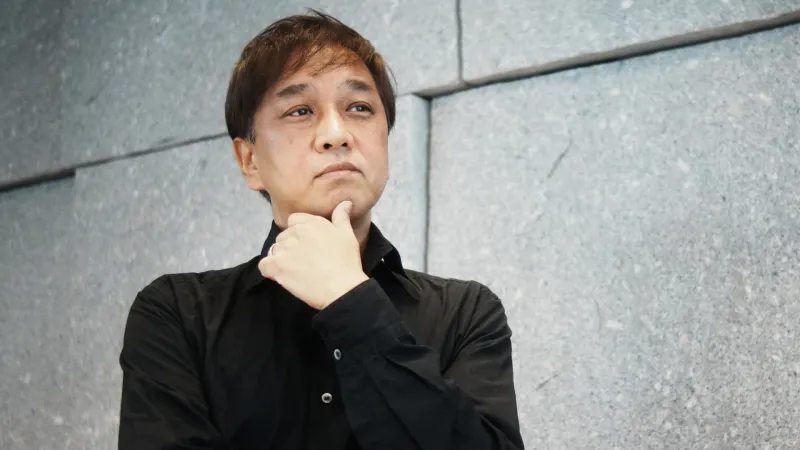
Kazuyuki Hoshino


The Sonic the Hedgehog franchise turned 35 years old this past summer, and to mark the occasion, iam8bit is hosting a special 35 Years of Speed: The Sonic Art Exhibit across Seattle and Los Angeles this month. While the Seattle edition occurred earlier this month, it arrives in Los Angeles at ARK/8 this weekend. To mark the occasion, we sat down with longtime character artist and director for the Sonic series, Kazuyuki Hoshino, to discuss the exhibit and Sonic's evolution over the years.
The event, set to take place in Los Angeles this weekend, features original art from more than 30 artists and aims to create a "fan-built visual compilation of the Sonic Universe" by telling Sonic's story through key scenes reimagined by the artists. The artist submissions were selected via criteria that equally weighed theme adherence, creativity and originality, technique and execution, and visual and emotional impact.
"Everybody knows that it's Sonic's 35th anniversary, and because of that, there are various histories of Sonic, and a lot of people throughout the ages who have enjoyed Sonic," Hoshino says. "This gallery is our way of showcasing his history and everything. There's a lot of obvious Sonic fandom and there are a myriad of talented creators that I've worked with in the past, so this gallery is to showcase the various arts by all of these creators and artists to celebrate Sonic."
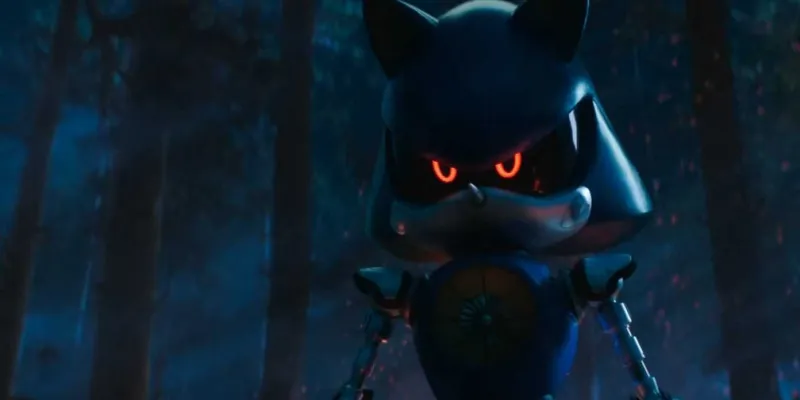
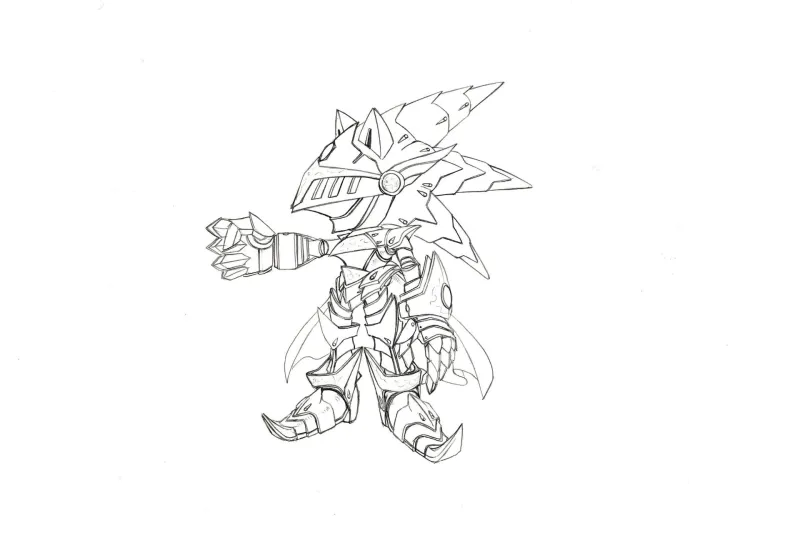
Hoshino joined Sega in 1991, right as the Sonic the Hedgehog franchise was taking off as not only Sega's new mascot, but also one of the most recognizable faces in entertainment. The Blue Blur and the company behind him were in the midst of challenging Nintendo for the gaming throne, and Hoshino's first Sonic-related project was meant to widen the gap in the technology Sega was using. Though released after Sonic the Hedgehog 2 (developed by Sega Technical Institute), Sonic CD was more of a successor to the first Sonic game. Hoshino, for his part, designed Amy Rose and Metal Sonic, two characters who still appear in Sonic games to this day.
In 2027, those two characters will take another big leap forward, joining Sonic, Tails, Knuckles, and Shadow (who Hoshino also designed) on the silver screen. And though he becomes slightly cagey when I mutter the words "Sonic the Hedgehog 4" – and not even in relation to the poorly received 2010 and 2012 games – Hoshino clearly brims with pride when discussing seeing his creations on the silver screen. "I'm just super excited, and there's nothing more happy and more pleasing for me than seeing them on a Hollywood big screen," he says. "The voiceover for Shadow was done by Keanu Reeves, one of my favorite actors, so to be able to have Keanu voice a character that I created... I couldn't be a luckier man to be a part of that and have him voiced by somebody like Keanu. For the next movie, you'll see Amy and Metal Sonic on the screen, and obviously not only will you have fans watching the movie because they love the game, but I'm assuming there will be people watching the movie even though they've never played a Sonic game before. [...] And so, if anybody who's never even touched or known about these games sees the movie and says, 'Hey, I love this character now,' and to see them love my characters from that, that's something that... it's a priceless thing to know."
And speaking of Shadow the Hedgehog, Hoshino collaborated with Takashi Iizuka, the head and creative officer of Sonic Team, to create the character. Iizuka joined Sega around when Hoshino did, with his first work on the Sonic franchise coming through quality-assurance work near the end of Sonic the Hedgehog 2 development, which took place largely in the United States. When Iizuka returned to Japan, they started putting the pieces in place for the earliest version of what we now know as Sonic Team. But with a relationship stretching back that far, I was curious how Hoshino's collaboration with Iizuka has evolved through the years, particularly as they both rose to prominent roles within the Sonic development team.
"I worked on Sonic CD while Iizuka-san worked on Sonic 2, and when Iizuka-san came back to Japan, we created this whole new Japan team to create a new Sonic Team, and our entire motivation was, 'Let's make Sonic a force for Sega that would be a great success,'" Hoshino recalls. "While our positions are different as a game designer versus a character artist, as the years went by, our positions as we both went up the ladder in our careers, you know, becoming directors in our respective titles, we both also started to take on leadership roles, and so there were a lot of changes and evolutions on that. I've had a lot of fun working with him this entire time, and one of the things that was the difference during the 2D age was that the project members, or the number of staff for the 2D games was very small. We had small teams, so the contribution or influence of each individual person was big. It was kind of like a band, if I were to make an example: It's like a band where we have a new guitarist and, 'Whoa, that's going to totally change the sound of this band!' So everybody's contribution was significant."
But as times changed and gaming technology evolved, Sonic Team also changed and evolved, leading to less frequent direct interactions between Hoshino and Iizuka. "When it became the 3D age, it became more of a mass production, but we had more members of the team, and so Iizuka-san and I both had a group on our team to lead," Hoshino continues. "So, yes, we did work together, but we had to lead our own teams separately. So, as our careers went up, we still continue to work together, but kind of separately on everything. And yet, I believe I know what Iizuka-san is thinking because of our history working together. We're both part of the Sonic family, and I believe that Iizuka-san is a reliable leader who, despite what the higher-ups may say to go in a certain direction for Sonic, our motivation is to make something that is fun and what we want to make for Sonic that is appealing to the fans. I know because of our history together and how long we've worked together what he's thinking. 'Maybe he's feeling a little down right now,' 'Oh, he's excited about something!' I kind of basically know what he's feeling because of our big history together. It's such a great collaboration working with Iizuka-san."
And that transition from the 2D age to the 3D age shifted in more ways than just the team size and composition. While Sonic Team had a notoriously challenging transition from 2D to 3D over the long term (read more about that struggle here), thanks in large part to the sheer size of the areas that needed to be created and unnecessarily tight deadlines, the artist and character designers faced very unique challenges, as they were required to rethink how to depict iconic characters. "Sonic's a really fast character, so we spent all this time making this huge, long, elaborate map, and then we'd run through it in like 10 or 15 seconds," Iizuka told me in 2016.
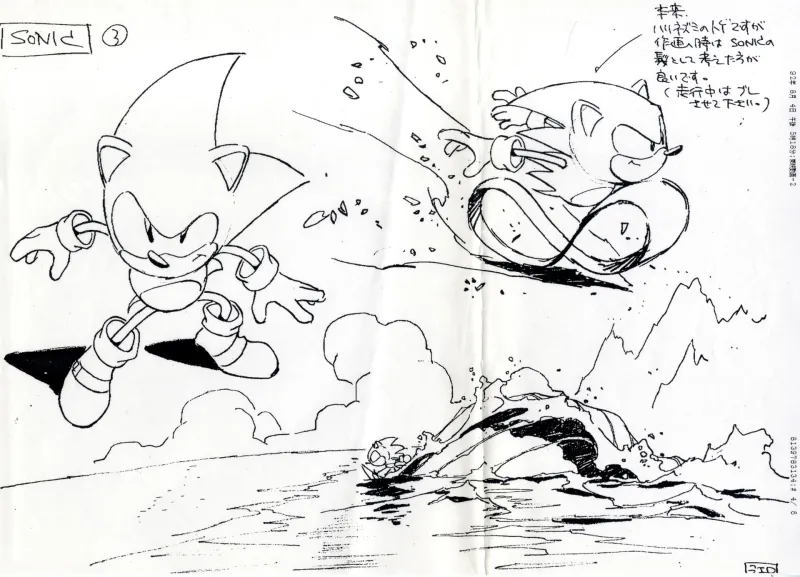
"2D to 3D was definitely a big transition," Hoshino says. "When it was 2D, you could basically see Sonic's side, the characters' sides, and you can basically see their front and whenever they have an expressions, you saw their expression. But once we transitioned to 3D, there was depth, so you see different angles of this character. You see the backside of Sonic when he's running away from the camera. Sonic has a big head, and in the original 2D, his hands and feet were disproportionate, and so [in 3D] his hands and feet sometimes would be hidden because of his big head. So one of the big things we had to do was to change Sonic's proportions to make his limbs a little longer and his hands and feet a little longer so they show up. And then, any actions that he does in the 3D would still be dynamic and awesome and cool-looking."
But the leap to 3D also meant more intensive work for the art team as they transposed their art from 2D to 3D through the new polygonal assets. "In 2D, it was in dot-pixels and all you had to do was just color in the pigments and you have a picture; when it became 3D, it became polygons, so we had to use new technology and new equipment to create these characters," he says. "So we had to create different dimensions and different angles of these characters that we've never seen or had to create before when it was during the pixel days. Because of that, there were a lot of talented designers who were only used to the 2D designs. We had to have an overhaul of the designers to keep up with this new design and new art form, to keep up with the new technology."
Today, Hoshino is creative director at Sonic Team, overseeing several endeavors in parallel. Though his role has evolved through his decades-long tenure at Sega, the art of Sonic has remained very close to his heart. And now, fans can witness art from across Sonic's many eras, including art contributed by fans. "I always check social media every day to see what the fandom does and how they feel about Sonic," Hoshino says. "I feel very excited to know that the fandom enjoys everything that is Sonic, and then see how that gets applied for their own content creations."
This brand initiative is a part of Sega's larger celebration of Sonic's 35th anniversary, which has included various brand collaborations, special anniversary-themed cartridges of Sonic 1 and Sonic 2 (another part of Sega's partnership with iam8bit), the release of Sonic Frontiers: Definitive Edition, a Chaos Hunt real-life scavenger hunt, and new dates for the official Sonic the Hedgehog music tour, Sonic Live in Concert.
The iam8bit 35 Years of Speed: The Sonic Art Exhibit opens on September 26 and runs through September 27. It is free, but attendees should register through Eventbrite.